
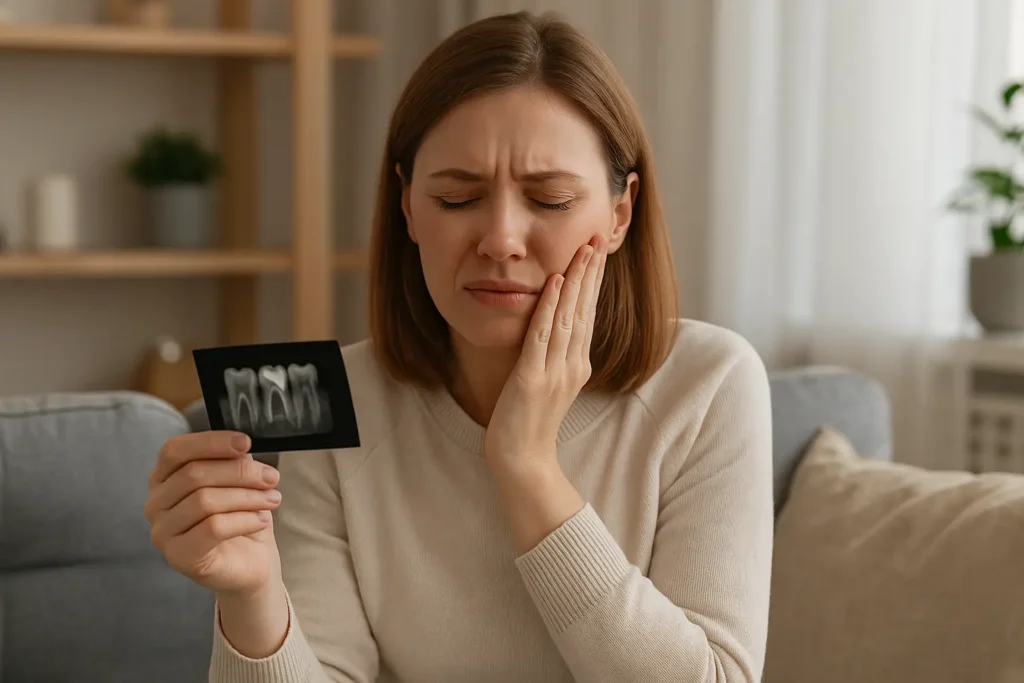
When your dentist says you need a crown, it can trigger mixed feelings. 😬 Relief — because there’s a solution. Worry — because you’ve heard crowns can be expensive, sensitive, and time-consuming. And somewhere in between sits that quiet question: “Is this really the best option for me?”
You’re not alone in asking that. The truth is, dental crowns are both powerful and imperfect. They save countless teeth every year — but they also come with trade-offs that patients rarely hear about upfront.
So let’s talk about it — calmly, clearly, and without judgment. ☕
This guide breaks down the disadvantages of dental crowns, not to scare you, but to help you make an informed, confident decision.
What Exactly Is a Dental Crown?
A dental crown is a custom-made “cap” that covers the entire visible part of a tooth — protecting and rebuilding what’s been weakened by decay, fracture, or previous dental work.
Dentists recommend crowns when a tooth:
- has been badly damaged or cracked,
- contains a large filling with little natural structure left,
- needs reinforcement after a root canal,
- supports a dental bridge, or
- needs cosmetic correction (shape or color).
In short, a crown is like armor for your tooth — strong, protective, and long-lasting. But that strength requires preparation, precision, and, yes, a bit of sacrifice.
💰 The Financial & Time Commitment
Money and time are two things no one likes to waste. Crowns require both.
Understanding the Investment
Depending on where you live and the material chosen, a dental crown can cost anywhere from $800 to $3,000 + per tooth. That figure can climb higher if you need preparatory work (like a root canal or core buildup).
What affects cost?
- Material: Gold, porcelain-fused-to-metal (PFM), zirconia, or E-MAX each have different price points.
- Location: Dentistry in New York City costs more than in Des Moines.
- Complexity: Extra procedures or digital scans raise the bill.
- Dentist expertise: Specialists charge more for precision — but quality work reduces future redo costs.
Insurance usually covers about 50 %, leaving a significant balance. If that number makes you hesitate, you’re not being difficult — you’re being practical.
💡 Good news: you don’t have to shoulder it all at once.
Programs like Dental Financing / Loans can spread costs into predictable monthly payments.
You can also explore Dental Discount Plans that lower procedure fees by 20 – 60 %. Patients often use both to make essential care more attainable.
Dentist Insight:
“We’d rather see a patient move forward with care using a payment plan than delay until the tooth fractures. Cost shouldn’t decide whether you stay healthy.” 💬

⏰ The Two-Visit Process
Most traditional crowns require two appointments:
- Visit #1 – Preparation:
The dentist numbs the area, removes damaged structure, shapes the tooth, and takes an impression (digital or putty). Then, you leave with a temporary crown. - Visit #2 – Placement:
About 2–3 weeks later, the permanent crown returns from the lab. The dentist checks fit, adjusts bite, and cements it securely.
Same-day crowns exist (CEREC technology), but not every office has it. For busy people, scheduling two long visits can be challenging — and temporary crowns sometimes loosen between visits, adding an unplanned stop.
🦷 The Physical Experience: Sensitivity & Adjustment
You might expect your tooth to feel perfect immediately. In reality, it’s normal for there to be an adjustment phase.
Sensitivity
Mild sensitivity to temperature or pressure often appears in the first days.
Why? The nerve inside the tooth just endured vibration, heat, and reshaping. It’s like your muscles after a workout — tender but healing.
Usually, this fades within two weeks. Toothpaste for sensitive teeth and avoiding extreme hot / cold drinks helps tremendously.
If sensitivity worsens or lingers, tell your dentist. The crown might sit a hair too high — a tiny adjustment can fix it instantly. 😊
Gum Irritation
A crown margin that’s even slightly bulky can rub or trap plaque at the gumline. This can cause redness or bleeding while brushing. Proper contouring and good hygiene solve it, but it’s a reminder of how important dentist skill is.
Rarely, patients allergic to certain metals may react to porcelain-fused-to-metal crowns. If you know you have sensitivities, request all-ceramic or zirconia. They’re biocompatible and gentle on gums.
Nerve Issues
When a tooth already has deep decay or a large filling, preparing it for a crown can push close to the nerve (pulp). Sometimes the nerve calms; other times, inflammation develops later — meaning a root canal might eventually be needed.
This doesn’t mean your dentist did anything wrong; it’s simply biology. Still, knowing the possibility ahead of time helps you plan emotionally and financially.
⏳ Long-Term Disadvantages & Lifespan
Crowns are durable but not immortal.
Irreversible Procedure
To fit a crown, your dentist must remove 60 – 70 % of the visible tooth. Once done, the tooth will always require coverage. You can’t “undo” it later. This commitment is often worth it to save the tooth, but it’s permanent.
Finite Lifespan
Average lifespan: 5 – 15 years.
With excellent care: 20 +.
What shortens that?
- Poor brushing / flossing → decay at the gumline.
- Nighttime grinding (bruxism) → cracks or loosened cement.
- Chewing ice / hard candy.
- Mouth trauma.
If you clench or grind, investing in a custom Night Guard is the best protection. It costs far less than replacing a broken crown later. 💪
Aesthetic Changes Over Time
Even beautiful crowns can show age.
- Porcelain-fused-to-metal crowns may reveal a dark line at the gum if gums recede.
- If you whiten natural teeth later, the crown won’t lighten to match.
- Older ceramics can look opaque versus natural enamel.
Modern materials like E-MAX or zirconia now mimic translucency almost perfectly, so discuss options before cementing.
🧾 Comparison of Common Materials
| Material | Lifespan | Pros | Cons |
|---|---|---|---|
| Zirconia | 10–20 + yrs | Ultra-strong, metal-free, biocompatible | Harder to adjust color |
| E-MAX | 10–15 + yrs | Best aesthetics, natural translucency | Slightly less durable for molars |
| Porcelain-Fused-to-Metal | 5–15 yrs | Proven strength, affordable | Possible gray line, gum irritation |
| Gold Alloy | 20 + yrs | Kind to opposing teeth, extremely durable | Metallic look, higher cost |
💡 Tip: If appearance matters, ask to whiten your natural teeth before color-matching your crown. Once cemented, its shade can’t change.
⚙️ The Human Factor: Skill Matters
Most crown “problems” aren’t the crown — they’re human error.
A high bite, an open margin, or an oversized contour can create discomfort or gum issues. That’s why choosing a precise, communicative dentist is key.
When researching, use the ADA Find-a-Dentist tool or schedule consultations through a Dentist Near Me search. Look for someone who shows before-and-after photos and listens carefully to your goals.
Checklist: 5 Questions to Ask Before Getting a Crown
- What material do you recommend for this tooth, and why?
- What is the all-in cost, including prep and follow-ups?
- How long should I expect sensitivity?
- What happens if the bite feels off?
- Do you use digital impressions or send to a local lab?
A great dentist welcomes these questions — it shows you care.
🧭 Alternatives to Dental Crowns
Crowns are excellent, but not always mandatory. Depending on the damage, your dentist may suggest:
- Inlays / Onlays: Partial restorations that preserve more natural tooth.
- Dental Bonding: Quick, inexpensive repair for minor chips or discoloration.
- Veneers: Cosmetic porcelain shells for front-tooth aesthetics.
- Extraction + Implant: Last resort when a tooth is too compromised.
For patients managing costs, read our guide to affordable dental care without insurance to compare realistic options.
❤️ Making an Informed Decision
We’ve covered a lot — cost, sensitivity, lifespan, and even alternatives. It might sound overwhelming, but information is power.
Understanding the disadvantages of dental crowns doesn’t mean avoiding them; it means saying yes with confidence.
Because here’s the truth:
- A crown can prevent tooth loss.
- It can stop pain and restore your bite.
- And with good care, it can last decades.
So ask questions. Discuss budget openly. Protect your investment with consistent hygiene and, if needed, a night guard.
The real disadvantage isn’t getting a crown — it’s getting one without understanding the full picture. You now have that clarity. 🌟
⚖️ Medical Disclaimer: Content on HiTechDental.info is for educational purposes only and not a substitute for professional diagnosis or treatment. If you experience pain, swelling, or urgent symptoms, seek a licensed dentist immediately.
💼 Affiliate Disclosure: HiTechDental.info participates in affiliate programs (including Amazon and other trusted partners). When you buy through our links, we may earn a small commission — at no extra cost to you. These partnerships help keep our guides accurate, independent, and free for readers.
© 2025 HiTechDental.info | All rights reserved.