
There’s a quiet moment many people experience after losing a tooth — a moment they don’t always talk about, but they feel deeply. Maybe it’s when you catch your reflection while brushing and notice the space that wasn’t there before. Maybe it’s when you’re smiling for a photo and instinctively adjust your expression, hoping others won’t notice. Or maybe it’s while you eat, shifting food to the opposite side without even realizing it.
If any of this feels familiar, take a slow breath. What you’re feeling is normal — and incredibly human. ❤️
Tooth loss isn’t just a physical change. It affects confidence, daily habits, the way you speak, the way you smile, and the comfort you feel in social situations. This is why modern dental implants are so powerful. They’re not simply a “replacement tooth.” They are a reliable, long-term way to restore function, appearance, and a sense of ease that many people haven’t felt in years.
But the moment you start researching, everything gets complicated quickly. Words like endosteal, subperiosteal, abutments, sinus lift, osseointegration, and All-on-4® make it feel like you’ve stepped into a textbook. Most explanations online lack warmth or clarity — even though implants are meant to help you feel comfortable again.
This guide is designed to bring that comfort back.
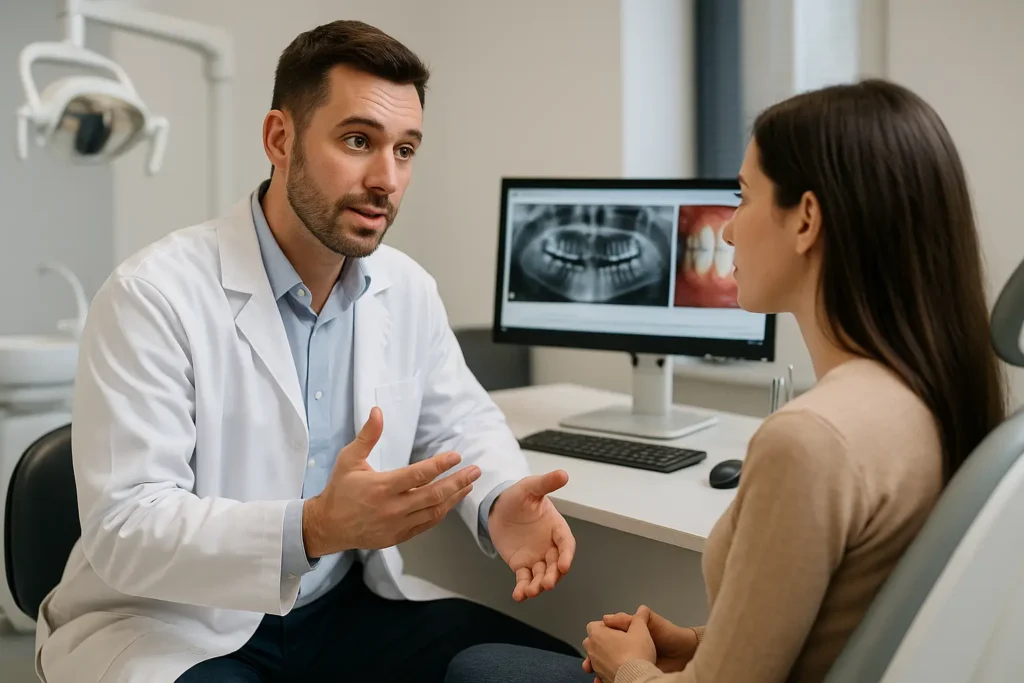
Imagine sitting with a calm, kind U.S. dentist who explains things clearly, without rushing, and without overwhelming you. Someone who breaks complex topics into easy steps, answers questions you haven’t even thought to ask yet, and helps you understand exactly what each implant type means for you. 😊💙
By the end, you’ll feel more certain, more informed, and more confident about the next step in your smile journey.
What Dental Implants Actually Are — A Gentle, Human Explanation
A dental implant is often described as a “replacement tooth,” but that description leaves out what makes implants so extraordinary. An implant doesn’t just sit on your gums — it becomes a stable, integrated part of your jaw, giving you the closest match to natural teeth that dentistry can offer.
A dental implant replaces the root, not just the visible tooth. And this matters more than most people realize.
Every time you chew with a natural tooth, the root stimulates the jawbone. That stimulation tells your body, “This bone is needed — keep it strong.” When a tooth is missing, that stimulation stops, and the bone begins to shrink in a gradual process called resorption. Over time, this can change your bite, your facial shape, and even your long-term oral stability.
A dental implant prevents that from happening — and that’s one reason it is considered the gold standard for tooth replacement.
Every implant has three essential components:
1. The Implant Post (Your New Root)
A small titanium or zirconia screw placed into the jawbone. Titanium is biocompatible, which means the bone recognizes it as safe and bonds naturally with it.
2. The Abutment (The Connector)
A strong, custom-shaped connector that attaches the implant post to your restoration.
3. The Crown, Bridge, or Full-Arch Restoration (Your New Smile)
Carefully crafted to match your natural teeth in shape, shade, and size. When done properly, most people cannot distinguish an implant crown from a natural tooth.
Then comes the remarkable part:
Osseointegration — the biological partnership
Over several months, the bone grows around the implant surface and secures it in place. This biological bond gives implants the stability and strength that patients love — the kind of strength that lets you bite into crunchy foods, speak clearly, and smile with complete confidence. ✨
This is why dental implants feel natural, stable, and trustworthy.
The Two Foundational Types of Dental Implants
Even though you’ll find many implant brands and systems, every implant belongs to one of two core categories. Understanding these makes the whole topic feel far less overwhelming.
1. Endosteal Implants — The Gold Standard 🌟
“Endosteal” simply means placed inside the bone. These implants look like small screws and are inserted directly into healthy jawbone, where they act as artificial roots.
They are:
- the most commonly used implant type
- the most researched
- the most predictable
- and the best long-term option for most patients
Why People Prefer Endosteal Implants
- Highest success rate
- Strongest chewing ability
- Longest lifespan
- Most natural look and feel
- Ideal for single, multiple, and full-arch treatments
🌿 What the experience feels like
Many patients arrive nervous for their appointment, imagining something intense or painful. But afterward, the most common feedback is:
“That was much easier than I expected.”
Many even compare it to — or prefer it over — a tooth extraction. With modern anesthetics and techniques, implant placement is typically quick, gentle, and surprisingly comfortable.
Recovery is usually smooth, and most people return to normal routines the next day.
2. Subperiosteal Implants — A Smart Option for Low Bone Density
Not everyone has enough jawbone for endosteal implants. Some people would require bone grafts, but not everyone is a good candidate or wants to undergo that process.
That’s where subperiosteal implants come in.
“Subperiosteal” implants sit on top of the bone but under the gums, supported by a custom metal framework rather than being inserted into the bone.
Best For:
- Significant bone loss
- Patients who cannot (or prefer not to) undergo grafting
- Individuals seeking more stability than dentures can provide
With today’s 3D imaging and digital modeling, these frameworks are customized with high precision, offering much better comfort and predictability than older versions.
Real Implant Solutions for Real Situations
Now that you understand the two major implant categories, let’s talk about how implants are used in everyday dentistry. These are the treatments patients actually receive based on their specific needs.
Single Tooth Implants — The Most Natural Tooth Replacement 🦷✨
If you’re missing a single tooth, this is the closest you can get to replacing it naturally.
Why Patients Choose This Option
- No need to shave down healthy neighboring teeth (unlike a dental bridge)
- Feels just like a natural tooth
- Restores full chewing strength
- Prevents bone loss in the area
- Blends seamlessly with your smile
With proper placement and restoration, most people forget they even have an implant. It becomes part of everyday life — effortless and stable.
Imagine biting into a crisp apple or laughing in a group photo without thinking about the missing tooth. That’s the everyday freedom a single implant restores.
Multiple Tooth Implants & Implant-Supported Bridges
If several teeth in a row are missing, placing an implant for each one isn’t always necessary.
A more efficient approach is:
Two implants → supporting a three-tooth bridge
Or:
Three implants → supporting a four- or five-tooth bridge
Why this works so well
- Reduces cost
- Prevents unnecessary surgeries
- Provides strong biting support
- Restores full function and appearance
- Helps maintain bone structure
This method blends strength, aesthetics, and support — ideal for people missing multiple adjacent teeth.
Full-Arch Implants — All-on-4®, All-on-6, and Life-Changing Smile Restorations
This is the transformative option for people missing most or all teeth in a single arch.
A full, permanent set of natural-looking teeth is supported by 4 to 6 strategically placed implants.
Why Full-Arch Solutions Change Lives
- Permanent, fixed teeth
- No slipping like dentures
- No adhesives
- Dramatically improved chewing strength
- Natural speech
- Beautiful smile aesthetics
- Often completed in a single day (“same-day smile”)
For many, this restores confidence, comfort, and function they haven’t felt in years. It’s more than a dental procedure — it’s a lifestyle upgrade.
What a Caring Dentist Evaluates During Your Consultation 🩺
A truly responsible implant dentist never rushes this step. Your safety, comfort, and long-term success depend on a thorough evaluation.
Here’s what your dentist considers carefully:
✔️ Bone Density & Volume
Evaluated with 3D CBCT scans to determine whether your bone can support implants.
✔️ Gum Health
Healthy gums reduce complications and contribute to long-term stability.
✔️ Bite & Jaw Alignment
Ensures your implant integrates naturally with your chewing pattern.
✔️ Medical History
Conditions like diabetes, autoimmune issues, or smoking habits don’t disqualify implants — but they require careful planning.
✔️ Your Personal Goals
Some want aesthetics.
Some want durability.
Some want minimal maintenance.
Some want affordability.
✔️ Your Budget
Implants are an investment, and dentists understand this. Helpful options include:
The goal is always to find a plan that balances quality, safety, and affordability.

Your Dental Implant Journey — A Clear Roadmap Toward a Confident Smile
Understanding each step helps you feel calm and prepared:
1. Consultation & 3D Planning
Your dentist examines your gums, bone, bite, and overall oral health to create a customized plan.
2. Implant Placement
A gentle procedure performed with local anesthesia.
3. Healing & Osseointegration (3–6 Months)
Your bone bonds to the implant, creating a strong foundation.
4. Abutment Placement
A connector is added to support your final restoration.
5. Custom Crown / Bridge / Full Arch
Your permanent, natural-looking tooth (or teeth) are placed — completing your renewed smile. 😊✨
Cost: Honest Guidance on Pricing and Realistic Options
Implants range in cost depending on several factors:
| Factor | Impact |
|---|---|
| Number of implants | More implants increase the total price |
| Materials used | Titanium, zirconia, porcelain choices |
| Type of restoration | Single crown vs. full arch |
| Bone grafting | Adds procedural steps and cost |
| Dentist’s experience | Higher expertise improves outcomes |
| Geographic location | Major cities often cost more |
Smart Ways to Reduce Costs
- Dental Discount Plans
- Flexible financing options
- Using implant-supported bridges instead of individual implants
- Treating one area at a time (phased treatment)
Once people see how many options exist, cost usually feels more manageable.

Are Dental Implants Safe? What ADA and Mayo Clinic Research Shows 🧠
Dental implants are considered one of the safest and most predictable procedures in modern dentistry. With decades of clinical evidence and continuous innovation, implants consistently deliver high success rates and long-term stability — especially when the treatment is planned carefully and performed by a qualified dental professional.
What the ADA Says About Implant Safety
According to the American Dental Association (ADA), dental implants are supported by robust scientific research and are recognized as a reliable option for replacing missing teeth, restoring function, and helping maintain bone health. You can review the ADA’s official overview of implant-related oral health topics here:
ADA – Oral Health Topics
This resource reinforces that implants, when properly planned and maintained, offer strong clinical outcomes and long-term success.
Insights From the Mayo Clinic
The Mayo Clinic also highlights dental implants as a durable and comfortable alternative to traditional tooth replacement methods. Their clinical guidance points out that implants can improve chewing, support clearer speech, and enhance everyday quality of life. More details are available in their patient guide:
Mayo Clinic – Dental Implant Surgery
Success Rates & Reliability
Implants typically achieve success rates between 95% and 98%, according to long-term clinical studies. This high predictability — combined with modern imaging, biocompatible materials, and refined surgical techniques — makes implants one of the most reliable solutions for tooth replacement available today.
Life After Dental Implants — What Patients Notice Most 😊✨
Patients often share their experiences during follow-ups:
- “I can smile in photos without thinking about it.”
- “I can chew everything again.”
- “My speech feels clearer.”
- “I feel younger.”
- “I finally feel like myself again.”
Implants give more than a tooth — they give back comfort, confidence, and a sense of normalcy.
Your Next Step: Choosing a Dentist Who Truly Listens
There are many types of dental implants — but the right one for you depends on your health, goals, comfort level, and long-term expectations.
If you’re ready to explore your options, start by connecting with a dentist who prioritizes patient education and transparent communication.
A helpful place to begin:
Dentist Near Me
You deserve a smile that feels natural, strong, and deeply yours — and with today’s implant advancements, that outcome is more achievable than ever. 💙✨
Medical Disclaimer: Content on HiTechDental.info is for educational purposes only and not a substitute for examination or diagnosis by a licensed dentist. If you experience pain, swelling, or urgent dental symptoms, seek professional care immediately.
Affiliate Disclosure: HiTechDental.info participates in affiliate programs (including Amazon and other trusted partners). When you buy through our links, we may earn a small commission — at no extra cost to you. These partnerships help keep our guides accurate, independent, and free for readers.
© 2025 HiTechDental.info | All rights reserved.