Picture this for a moment.
You’re relaxing on the couch with someone you love. Maybe you share a kiss, sip from the same cup, or borrow their fork without thinking twice. Later, you notice their gums look a little red… maybe they mentioned bleeding when they brush… and a small, nervous thought pops into your mind:
“Wait… if they have gum problems, can I get it too?” 😬
If that’s been on your mind, you’re not alone — not even close. As dentists, we hear this question all the time. People rarely shout it; they usually whisper it, because it feels personal. It’s not just about health. It’s about intimacy, safety, and the people you care about most. ❤️
So let’s talk about it in a calm, honest way. No shame, no panic, no scare tactics. Just a friendly, U.S.-based dentist walking you through what’s really going on inside the gums — and what you can do about it.
Is gum disease contagious?
The real answer is more nuanced than a simple “yes” or “no.” By the end of this article, you’ll understand:
- What gum disease actually is
- What can (and can’t) be passed from person to person
- Who’s at higher risk
- How to protect yourself and the people you love
And hopefully, you’ll feel a lot more calm and in control. 🧘♀️🧘♂️
First, What Exactly Is Gum Disease?
Before we can answer whether gum disease is contagious, we need to be clear on what we’re talking about.
Think of your gums as the protective, supportive blanket that wraps around your teeth. When that blanket is healthy, it’s:
- Firm
- Pink
- Does not bleed when you brush or floss
- Holds each tooth snugly in place
But your mouth is home to millions of bacteria, and some of them are troublemakers. When they’re allowed to build up, they cause irritation, inflammation, and eventually damage.
At the center of this story are two main characters: plaque and tartar.
- Plaque is a soft, sticky film of bacteria that constantly forms on your teeth.
- If plaque isn’t removed daily, it hardens into tartar (or calculus), which sticks tightly to the teeth and gumline and can only be removed by a dental professional.
Once tartar is sitting along your gumline, it’s like building a fortress where harmful bacteria can live 24/7. That’s where gum disease begins.
Gingivitis: The First Warning Sign 🚩
Gingivitis is the earliest, mildest stage of gum disease.
Typical signs include:
- Red or swollen gums
- Gums that bleed when you brush or floss (“pink in the sink”)
- Mild tenderness
- Sometimes, bad breath that doesn’t really go away
The important thing to know is this:
👉 Gingivitis is reversible.
With good brushing, daily flossing, and a professional cleaning to remove tartar, gums can go back to being healthy and firm. Imagine brushing at night, spitting, and seeing no blood at all — that’s what treating gingivitis can give back to you. ✨
Periodontitis: When Things Go Deeper
If gingivitis is ignored, it can progress into periodontitis, which is more serious and more destructive.
In periodontitis:
- Gums begin to pull away from the teeth, forming spaces called pockets
- Those pockets trap more bacteria and plaque
- The infection and inflammation can reach the bone and ligaments that hold your teeth in place
Over time, this can lead to:
- Gum recession (teeth look longer)
- Loose or shifting teeth
- Pain when chewing
- Tooth loss
So when we say “gum disease,” we’re really talking about a spectrum — from mild, reversible inflammation to advanced disease that can damage bone. Understanding that spectrum is key to understanding how “contagious” it really is.
So, Is Gum Disease Contagious? The Nuanced Answer
Here’s the most important idea in this entire article:
Gum disease itself — as a full condition — is not contagious in the same way a cold or flu is.
You don’t “catch gum disease” just by sitting next to someone or talking to them.
What is shared between people, however, are the bacteria that can contribute to gum disease. And those bacteria can be passed through saliva.
So, the more precise truth is:
- You can’t catch “periodontitis” like you catch the flu.
- You can share certain bacteria that, in the right conditions, help cause gum disease.
That might sound scary at first, but take a breath. 😊
Just being exposed to these bacteria does not automatically mean you’ll develop gum disease. Your body, your habits, and your overall health play a huge role.
A Simple Way to Picture It: Seeds and Soil 🌱
Think of the bacteria as tiny seeds.
Think of your mouth (your gums, your habits, your health) as the soil.
- If the soil is healthy — good brushing, daily flossing, regular dental visits, no smoking — those seeds have a hard time taking root.
- If the soil is dry, neglected, and stressed — lots of plaque, poor hygiene, smoking, uncontrolled diabetes — those seeds can sprout into full-blown gum disease.
So yes, the bacteria can be shared…
But whether they grow into gum disease in you depends on how healthy your “soil” is. That’s where your power lies. 💪
How Harmful Bacteria Travels: Common Everyday Scenarios
You might be wondering, “Okay, so how do these bacteria actually get from one mouth to another?” Let’s look at some real-life examples:
- Deep Kissing
French kissing or open-mouth kissing is one of the most direct ways to exchange saliva and bacteria. It doesn’t mean you can never kiss again — it just means gum health is a “team sport” for couples. - Sharing Utensils, Cups, or Straws
Taking a bite of someone’s dessert, using their fork, or sipping from their drink ☕ passes saliva — and along with it, some of their bacteria. - Sharing a Toothbrush (Please Don’t 😅)
Toothbrushes can hold bacteria, plaque, and even traces of blood. Sharing a toothbrush is like transferring a concentrated sample of someone else’s mouth directly into yours. - Parent-to-Child Transmission
Parents often “clean” a dropped pacifier in their own mouth or share utensils with babies and toddlers. That can transfer adult oral bacteria into a child’s developing mouth.
Does this mean you should never share anything ever again? No. Life happens. But it does mean that if someone in the family has untreated gum disease, it’s especially important that everyone levels up their oral hygiene and that the person with symptoms gets real treatment, not just mouthwash.
Who Is Most at Risk? Understanding Your Vulnerability
A very natural follow-up question is:
“If bacteria can be shared, how worried should I be?”
That’s a smart question.
Some people are more vulnerable than others — not because they’ve done anything “wrong,” but because of a combination of health conditions, genetics, and habits.
Here are some of the biggest risk factors that make gum disease more likely once those bacteria are present:
| Risk Factor | Why It Matters for Your Gums | What You Can Do About It |
|---|---|---|
| Poor Oral Hygiene | Plaque builds up and hardens into tartar, giving harmful bacteria a permanent home. | Brush 2x daily, floss 1x daily, and stay consistent with professional cleanings. |
| Smoking / Vaping | Tobacco and nicotine reduce blood flow, weaken immunity, and slow healing in the gums. | Quitting is one of the best gifts you can give your mouth and your whole body. |
| Genetics | Some people are simply more prone to inflammation and bone loss, even with decent hygiene. | Tell your dentist if gum disease runs in your family and stay extra proactive with checkups. |
| Chronic Diseases | Conditions like diabetes can increase inflammation and lower your resistance to infection. | Work closely with your doctor and dentist to keep conditions controlled and monitored. |
| Hormonal Changes | Puberty, pregnancy, and menopause can make gums more sensitive and reactive. | Don’t skip dental visits during these times; gentle professional monitoring really helps. |
| Stress | Ongoing stress can weaken the immune system and make it harder to fight off bacteria. | Build in stress relief — walks, hobbies, sleep, therapy, mindfulness, or whatever helps you. |
| Poor Nutrition | A lack of nutrients slows healing and makes inflammation easier to trigger. | Aim for a balanced diet with fruits, vegetables, lean proteins, and whole grains. |
If you recognize yourself in some of these, you might feel a little worried — and that’s okay. That worry is your brain saying, “Hey, this matters. Let’s pay attention.”
The reassuring part? Every one of these risk factors comes with something you can do:
- You can improve your brushing and flossing habits.
- You can book that exam you’ve been putting off.
- You can ask your doctor and dentist to work together if you have diabetes, heart issues, or other conditions.
You’re not stuck. You have options. 💙
Your First Line of Defense: Building a Bacteria-Proof Routine
Now let’s shift fully into the action part. What can you actually do, starting today, to protect your gums — no matter what bacteria you’ve been exposed to?
Think of this as your gum health playbook. 📘
The Cornerstones of a Strong Gum Routine
These basics may sound simple, but they’re incredibly powerful when you do them consistently:
- Brush Gently but Thoroughly (2x per Day) 🪥
- Use a soft-bristled toothbrush and a fluoride toothpaste.
- Tilt the brush at a 45-degree angle toward the gumline.
- Use small, circular motions, not harsh scrubbing.
- Brush for a full two minutes, morning and night.
- Clean Between Your Teeth Every Single Day 🧵
Brushing alone can’t reach the tight spaces between your teeth, where plaque loves to hide. Options include:- Traditional floss
- Floss picks
- Water flossers
- Interdental brushes (tiny brushes that fit between teeth)
- Use a Gum-Friendly Mouthwash (Optional but Helpful) 🌀
A therapeutic mouthwash designed to reduce plaque and gingivitis can help lower overall bacterial levels and soothe inflamed tissue. It’s not a stand-alone cure, but it’s a good finishing step after brushing and flossing.
Your Daily Gum Health Checklist ✅
- Morning brush (2 minutes) — gentle circles along the gumline
- Daily floss/interdental cleaning — every tooth, not just where food sticks
- Evening brush (2 minutes) — go to bed with a clean mouth, not a full plaque party
- Visual check — do gums look pink and firm instead of red and puffy?
- Symptom check — any bleeding, bad breath, or tenderness that never quite goes away?
Even if this feels like a big change, start where you are. Maybe tonight you simply add flossing. Tomorrow, you time your brushing. Small steps count. 😊
The Power of Professional Care
Even the most dedicated brusher can’t remove tartar at home. That’s what professional cleanings are for.
During a routine visit, your dental team will:
- Remove plaque and tartar from above and below the gumline
- Measure pocket depths around your teeth
- Check for gum recession, bone loss, or early signs of disease
- Help you tweak your home routine based on what they see
If you don’t currently have a dentist you trust, or you’ve moved and feel overwhelmed searching for one, a tool like Dentist Near Me can make the process much easier. Instead of scrolling endlessly through random reviews, you get help connecting with verified providers near you so you can actually get in the chair and get answers.
And if cost is what’s holding you back (which is very common and completely understandable), exploring a Dental Discount plan can be a smart move. Discount plans are not insurance, but they can offer significant savings on exams, cleanings, x-rays, and even gum treatments — which makes staying on top of prevention much more realistic when money is tight. 💸➡️💙
Prevention and early care are almost always more affordable — and more comfortable — than waiting until teeth are loose or painful.

What Happens if Gum Disease Is Left Untreated?
This part isn’t meant to scare you, but to help you understand why gum health is such a big deal.
When gum disease is ignored — especially once it progresses into periodontitis — it’s not just about sore gums or bleeding when you floss. The chronic inflammation and bacteria can affect your whole body.
Research from major health organizations has found links between advanced gum disease and:
- Heart disease and stroke
- Diabetes complications and more difficulty keeping blood sugar under control
- Respiratory infections, such as pneumonia (especially in older adults)
- Adverse pregnancy outcomes, including preterm birth and low birth weight
Scientists are still studying exactly how all of these connections work, but the pattern is clear:
A healthy mouth is part of a healthy body.
If you’re a “numbers and science” person, you can find more details on gum disease and overall health from trusted sources like the National Institute of Dental and Craniofacial Research (NIDCR):
https://www.nidcr.nih.gov/health-info/gum-disease/more-info
The goal is not to give you one more thing to worry about — it’s to show you that taking care of your gums is not “cosmetic.” It’s a real, meaningful part of taking care of you. 🫶
Pro Insight: What Your Dentist Is Really Checking 🔍
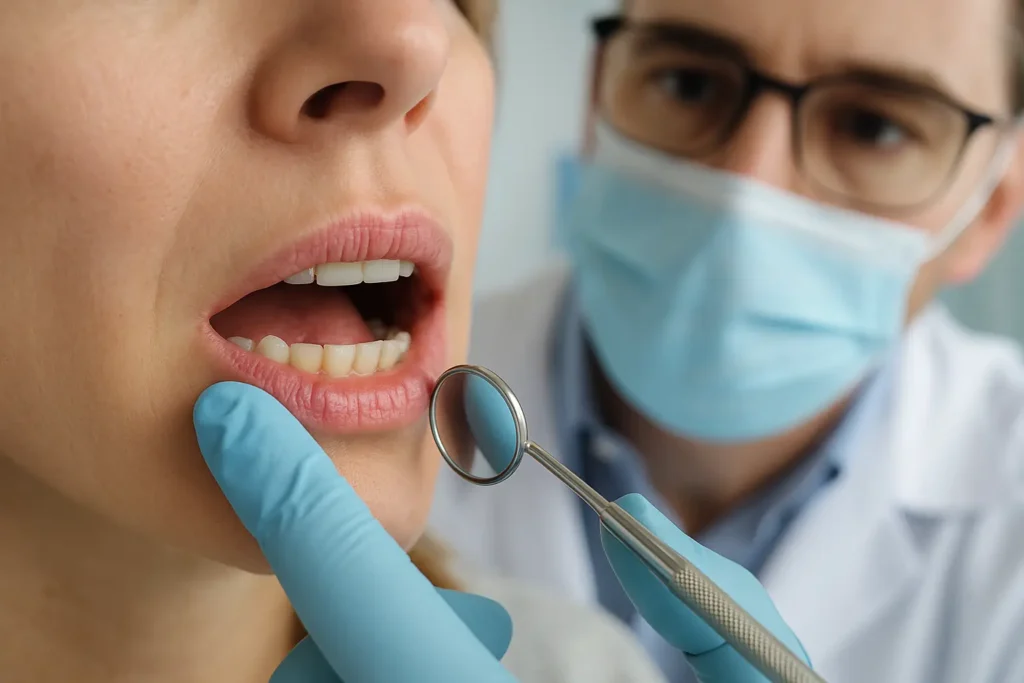
When we gently slide that thin measuring tool between your teeth and gums (the periodontal probe), here’s what we’re looking for:
- 1–3 mm: Healthy, normal pocket depths
- 4 mm: Early warning sign — possible early gum disease
- 5+ mm: More advanced disease where deep cleaning or other treatment is often needed
We also watch for bleeding, swelling, recession, and tooth mobility. None of this is to “judge” you — it’s to catch problems early, before they turn into emergencies.
Can You Tell If Your Partner Has Contagious Gum Bacteria?
This is where heart and science meet.
You might be looking at your partner or spouse and thinking:
“I love them. I don’t want to embarrass them. But I’m worried about their gums… and mine.”
That’s a very caring thought. 💗
While you can’t literally see bacteria, you can notice the signs that gum disease might be active and that harmful bacteria are thriving.
Common signs include:
- Persistent bad breath (that comes back soon after brushing or chewing gum)
- Red, puffy, or shiny gums
- Bleeding when brushing or flossing
- Gums pulling away from teeth, making teeth look longer
- Loose teeth or changes in how teeth fit together
If you’re noticing these signs in someone you love, it’s important to approach the conversation gently.
You might try something like:
“Hey, I’ve noticed your gums seem a little irritated lately, and I care about you. I’m reading more about how important gum health is for the whole body. What would you think about us both going in for a checkup together?”
That way, it’s not “you have a problem,” it’s “we are taking care of our health together.”
If your loved one is anxious or worried about the cost or the process, offering something like a Visit a Dentist Gift Card can be a really thoughtful way to make that step feel less scary and more like an act of self-care. It’s a loving nudge toward getting real help — for their sake and, yes, for yours too.
Myths vs. Facts About Gum Disease Contagion
Let’s clear up some of the most common misunderstandings so you can walk away with true clarity:
| Myth ❌ | Fact ✅ |
|---|---|
| “If my partner has gum disease, I’m doomed to get it.” | Harmful bacteria can be shared, but whether you develop gum disease depends on your hygiene, health, and risk factors. You’re not doomed. |
| “Bleeding gums are normal if you brush or floss hard.” | Healthy gums should not bleed. Bleeding is an early sign of inflammation and should always be taken seriously. |
| “Gum disease only happens to older people.” | While it’s more common with age, teenagers and young adults can absolutely develop gingivitis and early periodontitis. |
| “If my gums don’t hurt, they must be fine.” | Gum disease is often painless in early stages. That’s why regular checkups are so important — they catch problems you can’t feel yet. |
| “Once bone is lost from gum disease, brushing more will grow it back.” | Bone loss from advanced gum disease doesn’t simply regrow on its own. But treatment can stop or slow further damage and protect what remains. |
The more you understand what’s myth and what’s fact, the easier it is to take calm, confident action instead of worrying in circles.
The Final Word on: Is Gum Disease Contagious?
Let’s bring this full circle.
Is gum disease contagious?
- No, not in the simple way a cold or flu is. You don’t “catch gum disease” just by being around someone who has it.
- Yes, the bacteria that contribute to gum disease can be shared through saliva — kissing, sharing utensils, and so on.
But here’s the empowering part:
Bacteria are only part of the story. Your habits, your health, and your choices are the main characters.
If you:
- Brush twice a day with proper technique
- Clean between your teeth daily
- See your dentist regularly for cleanings and exams
- Manage other health conditions
- Avoid smoking or vaping
…you make your mouth a place where harmful bacteria — whether they started with you or someone else — struggle to do lasting damage.
If you’re feeling worried right now, that’s completely understandable. Let that worry turn into positive action:
- Book a cleaning and exam
- Upgrade your home routine, even if it’s just one new habit at a time
- Have a kind, honest conversation with your partner or family
Every time you choose to take care of your gums, you’re not just protecting your smile — you’re taking care of your future self. 🥹✨
And if you’re unsure where to start, reaching out to a dental professional is a strong, wise step. You don’t need all the answers before you walk through the door. That’s what we’re here to help with.
You’re not alone in this. You’re not powerless. And your smile is absolutely worth protecting. 💙
Medical Disclaimer: Content on HiTechDental.info is for educational purposes only and not a substitute for examination or diagnosis by a licensed dentist. If you experience pain, swelling, or urgent dental symptoms, seek professional care immediately.
Affiliate Disclosure: HiTechDental.info participates in affiliate programs (including Amazon and other trusted partners). When you buy through our links, we may earn a small commission — at no extra cost to you. These partnerships help keep our guides accurate, independent, and free for readers.
© 2025 HiTechDental.info | All rights reserved.