Let’s sit down and have a calm, honest talk about something almost everyone worries about but rarely says out loud: bad breath.
Maybe you’ve caught a whiff of your own breath in the car. Maybe you’ve leaned in to talk to someone and suddenly wondered, “Is my breath okay?” You might even find yourself covering your mouth when you laugh or turning your head slightly away in conversations, just in case. If that sounds familiar, please know this: you are absolutely not alone — and there is a lot you can do about it. ❤️
Bad breath (halitosis) can feel like a stubborn problem, especially when you’re already brushing, flossing, and maybe using mints or gum all day. When nothing seems to work, it’s easy to think, “What am I doing wrong?” The truth is, you’re probably not doing anything “wrong” — you just haven’t been given the right tools and a clear plan yet.
In this guide, we’ll walk through everything the way a friendly U.S. dentist would explain it in the office:
- What really causes bad breath (beyond “I ate garlic”).
- The difference between cosmetic and therapeutic mouthwashes.
- Which ingredients and products actually help.
- How to build a realistic routine that fits your life.
- When it’s time to see a professional — and how to make that affordable.
By the end, you’ll be able to walk down the mouthwash aisle (or scroll Amazon) and think, “Okay, I know exactly what I’m looking for.” 😊
What Really Causes Bad Breath? (It’s More Than Just Onions!) 😬
To fix bad breath, you first have to understand why it’s happening. Think of this like doing detective work for your own mouth.
Most persistent bad breath comes from bacteria in your mouth that produce something called volatile sulfur compounds (VSCs) — those are the gases that smell unpleasant. They often come from:
1. Strong Foods & Drinks ☕🧄
Garlic, onions, coffee, alcohol, and spicy foods are classic culprits. After you eat them, odor-causing compounds get into your bloodstream, reach your lungs, and leave through your breath. This type of bad breath is temporary — it usually fades once your body finishes processing the food. Mouthwash can help mask it, but it can’t fully stop it until digestion is done.
2. Your Tongue (The “Hidden” Source) 👅
This is the one almost everyone underestimates.
Your tongue has tiny bumps and grooves that trap:
- Food particles
- Dead cells
- Bacteria
That coating on the back of your tongue? It’s often a major factory for bad-breath gases. If you’re brushing your teeth but never cleaning your tongue, you’re skipping a huge part of the problem. You’re not alone in missing this step — most people were never told how important tongue cleaning is.
3. Everyday Oral Hygiene Habits
When brushing and cleaning between your teeth is inconsistent, bacteria get a feast. They feed on leftover food, create plaque, and produce odor. Over time, this can lead to:
- Cavities
- Gingivitis (early gum disease)
- Periodontitis (advanced gum disease), which is a frequent cause of chronic bad breath
So if you’ve been rushing through brushing or skipping flossing, it’s not about shame — it simply means your mouth hasn’t had enough help to stay balanced.
4. Dry Mouth (A Very Common, Very Frustrating Issue) 😮💨
Saliva is your mouth’s natural cleaning system. It washes away food bits, neutralizes acids, and helps keep bacteria under control. When your mouth is dry, bacteria multiply more easily, and bad breath gets worse.
Dry mouth can be caused by:
- Certain medications (especially for blood pressure, allergies, anxiety, or depression)
- Mouth breathing (day or night)
- Some medical conditions, like Sjögren’s syndrome
- Dehydration or heavy caffeine/alcohol use
If you often wake up with sticky, dry feeling in your mouth, or need to sip water constantly, dry mouth may be a big piece of your halitosis puzzle. That’s a very common problem — not a personal failing.
5. Health Conditions Beyond the Mouth
Sometimes, persistent bad breath is a sign of something deeper. Conditions like:
- Chronic sinus infections and post-nasal drip
- Tonsil stones
- Acid reflux (GERD)
- Uncontrolled diabetes
- Liver or kidney problems
can all show up as unusual breath odors. As the Mayo Clinic notes, bad breath is often tied to plaque and gum disease — but in some cases, it can also be linked to systemic issues.
If you’re taking good care of your mouth and you’re still struggling, it’s a smart, responsible move to dig deeper with a professional.
For many people, that starts with a comprehensive visit focused on prevention and diagnosis — similar to what we describe in our guide on Diagnostic & Preventive Dental Care, where regular exams and cleanings help stop small problems from becoming big ones.
Cosmetic vs. Therapeutic: Choosing the Right Mouthwash for Bad Breath
Now let’s talk about the bottles on the shelf.
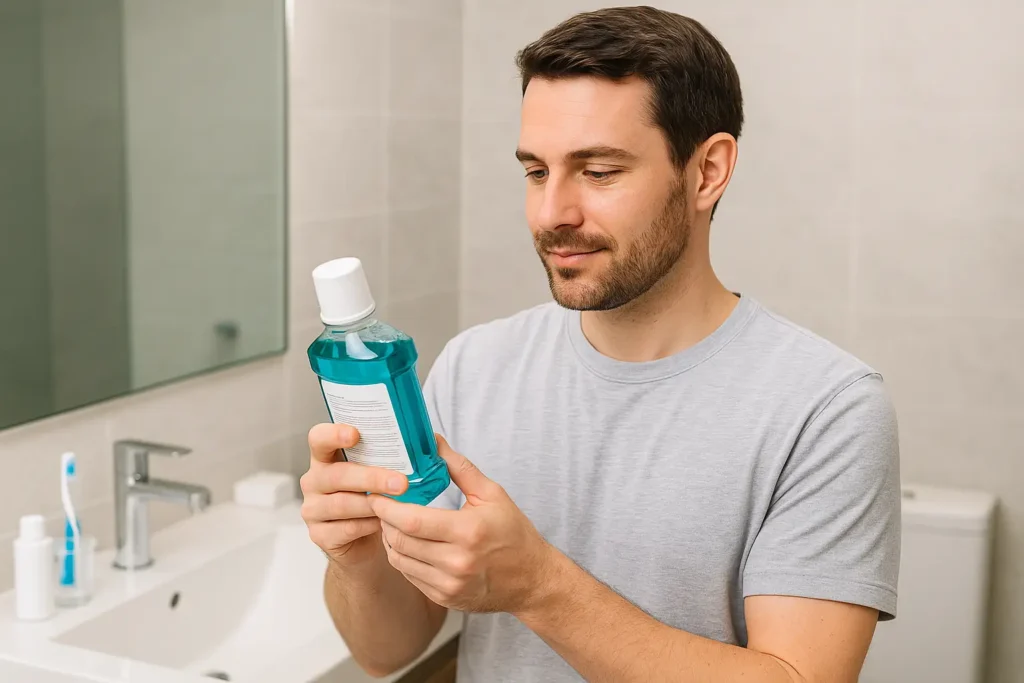
The dental aisle can feel like a wall of promises: “Arctic Blast!”, “Ultra Mint!”, “24-Hour Fresh!” But underneath the labels, most mouthwashes fall into two main categories. Understanding these can change everything.
As the American Dental Association (ADA) explains, there are broadly two types of mouthrinses: cosmetic and therapeutic. Cosmetic rinses mainly mask odor; therapeutic ones contain active ingredients that actually help treat specific oral conditions.
Cosmetic Mouthwashes
These are like a quick perfume for your mouth:
- What they do: Mask bad breath with strong flavor (usually mint).
- What they don’t do: They don’t meaningfully reduce odor-causing bacteria or treat underlying disease.
- When they’re okay: Before a meeting, after a garlicky lunch, or for a short burst of freshness.
They’re not “bad” — they’re just not a long-term solution for chronic halitosis.
Therapeutic Mouthwashes
These are the ones dentists care most about for real breath control:
- What they do: Use active ingredients to reduce bacteria, neutralize sulfur compounds, and sometimes help with plaque, gingivitis, or dry mouth.
- What they treat: Chronic bad breath, early gum inflammation, plaque buildup, and in some cases sensitivity or cavity risk.
Here’s a simple comparison:
| Feature | Cosmetic Mouthwash | Therapeutic Mouthwash |
|---|---|---|
| Main role | Mask odor for a short time | Treat bacteria, VSCs, and/or inflammation |
| Typical ingredients | Flavor, fragrance, sometimes alcohol | CPC, chlorine dioxide, zinc, essential oils, fluoride |
| How long it helps | Minutes to an hour | Several hours with regular use |
| Best use | Quick freshen-up | Ongoing halitosis, gum health, dry mouth support |
If you’ve been relying on a purely cosmetic rinse and still fighting bad breath, that frustration makes complete sense — the product was never designed to fix the root cause. 🌱
Key Ingredients to Look For (And a Few to Be Careful With) 🔬
When you flip the bottle around, here are the hero ingredients to look for in the best mouthwash for bad breath:
- Cetylpyridinium chloride (CPC)
A tried-and-true antimicrobial that helps reduce bacteria and plaque. - Chlorine dioxide / stabilized chlorine dioxide
Oxidizes and neutralizes sulfur compounds directly, which can be powerful for halitosis. - Zinc compounds (like zinc lactate or zinc chloride)
Zinc binds to sulfur so those gases never fully “turn into” bad smells. - Essential oils (eucalyptol, menthol, thymol, methyl salicylate)
Found in some well-known brands. These have documented antimicrobial effects but may also come with a stronger taste and sometimes higher alcohol content. - Xylitol
A dentist-favorite sweetener. Bacteria can’t use it as food, and it helps support saliva flow.
A Note About Alcohol in Mouthwash
Alcohol has traditionally been used in mouthwashes as a solvent and mild antiseptic. But for many people, especially those with dry mouth or sensitivity, alcohol-based rinses can:
- Dry out the mouth even more
- Cause burning or irritation
- Potentially make bad breath worse long term
That’s why for chronic bad breath, dentists often recommend alcohol-free formulas. The ADA also emphasizes choosing rinses that are proven safe and effective — look for products with the ADA Seal of Acceptance when possible.
💬 Dentist’s Reminder
“A burning feeling does not mean a mouthwash is ‘working better.’ If it leaves your mouth dry or irritated, it can actually set you back. The goal is a calm, healthy mouth — not one that feels like it’s on fire.”
Dentist-Recommended Mouthwash Picks (Available on Amazon) 🛒
Now, let’s connect the science to real-world options. These are examples of therapeutic-style mouthwashes that align with the principles above and are widely available on Amazon. Always read labels and talk to your dentist if you have specific conditions or are on medication. 💙
1. TheraBreath Fresh Breath Oral Rinse (Our “Steady Everyday” Pick)
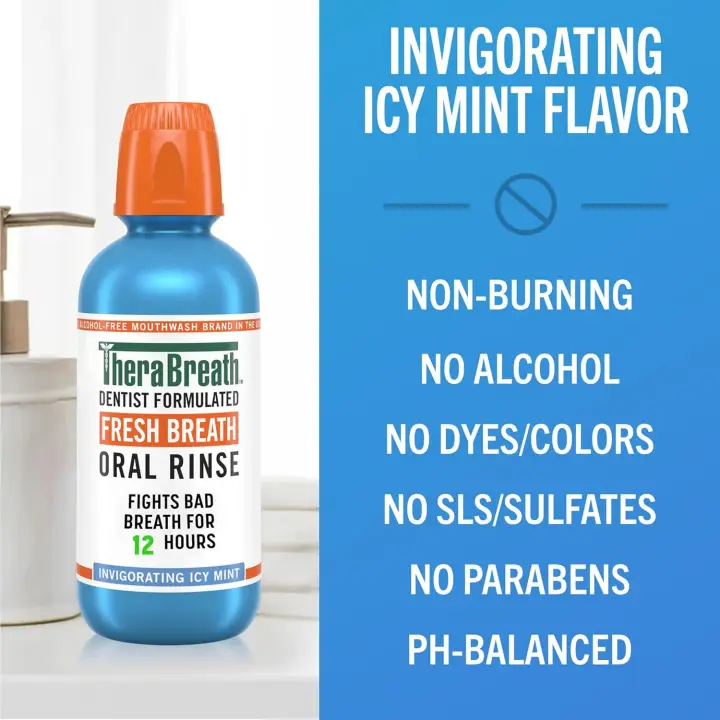
- Why people love it: Alcohol-free, non-burning, designed specifically for halitosis.
- Key features:
- Uses oxygenating compounds and xylitol to fight odor-causing bacteria
- Formulated to provide up to 12 hours of fresh breath when used as directed
- Accepted by the ADA for helping reduce bad breath
👉 You can check it out here:
TheraBreath Fresh Breath Oral Rinse – Icy Mint, 16 oz
This is a great starting point if your main concern is persistent bad breath and you prefer something gentle, alcohol-free, and dentist-formulated.
2. CloSYS Ultra Sensitive Mouthwash (Great for Sensitive or Dry Mouths)
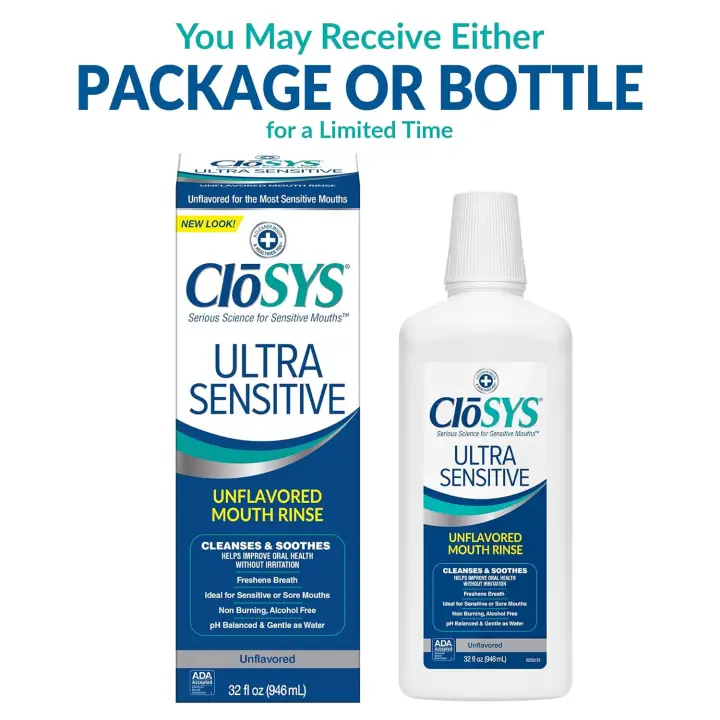
- Who it’s for: People who dislike strong flavors, have very sensitive mouths, or struggle with dry mouth.
- Key features:
- Unflavored, alcohol-free, and dye-free
- pH-balanced to be gentle on soft tissues
- Uses stabilized chlorine dioxide to help neutralize sulfur compounds
👉 Example option:
CloSYS Ultra Sensitive Mouthwash, Unflavored, Alcohol Free, 32 oz
If strong mint burns or irritates your mouth, this kind of formula can feel much more comfortable.
3. SmartMouth Original Activated Mouthwash (Long-Lasting Breath Control)
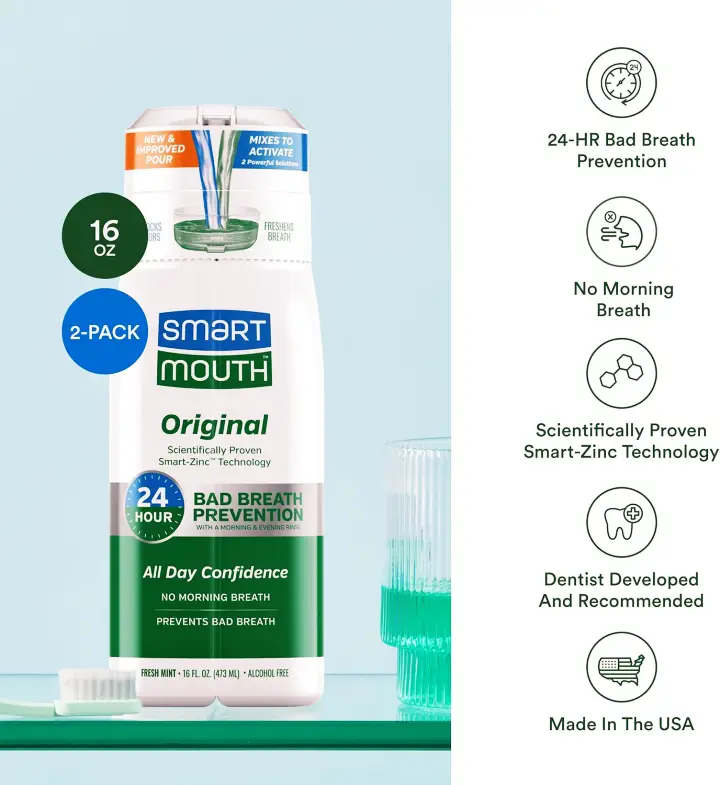
- Who it’s for: People who want longer-lasting breath control, such as for long workdays, public speaking, or social events.
- Key features:
- Uses a two-bottle “activated” system that releases zinc ions just before use
- Designed to prevent sulfur gas formation for many hours
- Alcohol-free and focused on odor prevention rather than just masking
👉 Example option:
SmartMouth Original Activated Mouthwash, 2 x 16 oz
This is often chosen by people who feel their breath worsens later in the day, even after brushing.
4. Crest Pro-Health Advanced Alcohol-Free Mouthwash (Big Brand, Multi-Protection)
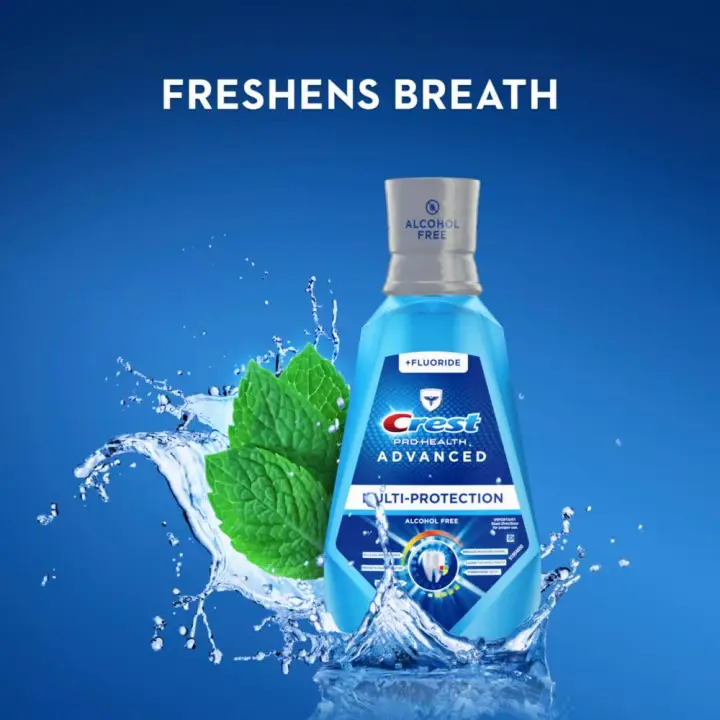
- Who it’s for: Those who like a familiar brand and want broader protection (plaque, gingivitis, cavities) plus breath support.
- Key features:
- Alcohol-free, with fluoride for cavity prevention
- Designed to support gum health while also targeting odor-causing bacteria
👉 Example option:
Crest Pro-Health Advanced Multi-Protection Mouthwash, Alcohol-Free
This can work well if you want one bottle that supports both breath and overall oral health.
Your 4-Step Fresh Breath Routine (Not Just a Rinse) ✨
Even the best mouthwash for bad breath can’t do everything alone. It works best as part of a coordinated daily routine. Think of this as your fresh-breath system:
✅ Step 1: Brush Gently but Thoroughly (2 Full Minutes)
- Use a soft-bristled toothbrush and a fluoride toothpaste.
- Point the bristles toward the gumline at a 45-degree angle and use small, gentle circles.
- Aim for a full two minutes — use a timer or an electric brush with a built-in timer.
If you want to explore upgraded toothpastes that help disrupt plaque more effectively, you can look for advanced formulas like LIVFRESH Molecular Toothpaste, which use unique ingredients to break down plaque and support cleaner enamel (our privacy policy mentions how we choose these carefully as recommended products).
✅ Step 2: Clean Between Your Teeth Every Day
Flossing or using an interdental brush is non-negotiable for bad-breath control:
- It removes trapped food and plaque between teeth (a major VSC source).
- Water flossers or interdental brushes are great alternatives if traditional floss feels awkward.
If you struggle with consistency, try linking it to a daily habit you already have (like doing it before your nighttime skincare routine).
✅ Step 3: Scrape Your Tongue (The Big Game-Changer) 👅
This is where many patients see the biggest immediate difference.
- Use a tongue scraper, gently starting from the back of your tongue and pulling forward.
- Rinse the scraper after each pass.
- Stop if you feel gagging — you don’t have to go extremely far back to notice benefits.
A lot of people like stainless-steel scrapers because they’re durable and easy to clean. For example, many patients choose products like DrTung’s Stainless Steel Tongue Cleaner, which is designed specifically to remove tongue coating and help with bad breath.
✅ Step 4: Rinse with a Therapeutic Mouthwash (The Finishing Step)
Now it’s time to use the mouthwash you’ve chosen:
- Measure the recommended amount (usually 15–20 ml).
- Swish thoroughly around your teeth and cheeks.
- Gargle gently at the back of your throat to reach the tonsil area.
- Continue for 30–60 seconds, then spit it out.
- Avoid eating, drinking, or rinsing with water for at least 30 minutes so the active ingredients can keep working.
If you’d like a deeper dive into creating a daily home-care routine with specific product ideas, you can explore our guide Best Oral Hygiene Products & Routines for a Healthy Smile, which walks through toothbrushes, pastes, rinses, and flossing tools step-by-step.
Bad Breath Myths vs. Facts (What Patients Ask All the Time) 💬
There’s a lot of confusion around halitosis. Let’s clear up some of the most common myths:
| Myth 🤔 | Fact ✅ |
|---|---|
| “The strongest mint flavor means it’s the best mouthwash for bad breath.” | Strong mint only masks odor. Long-term results come from ingredients that reduce bacteria and neutralize sulfur compounds, not just strong taste. |
| “If I brush more often, my bad breath will go away.” | Over-brushing can damage gums and enamel. If the cause is your tongue, dry mouth, diet, or infection, brushing alone can’t fix it. |
| “I use mouthwash, so I don’t really need to floss.” | Mouthwash can’t physically remove sticky plaque between teeth. Flossing or interdental cleaning is still essential. |
| “Once I find a good mouthwash, my bad breath is cured forever.” | Mouthwash is a powerful tool, but it works best as part of a full routine: brushing, tongue cleaning, flossing, hydration, and regular dental checkups. |
If you’ve believed some of these myths, you’re in very good company — most people have. The important thing is that now you know what really works. 🌟
When the Best Mouthwash for Bad Breath Still Isn’t Enough
Sometimes, even after:
- Choosing a great therapeutic mouthwash
- Brushing and flossing consistently
- Cleaning your tongue every day
…your breath still doesn’t feel right. That’s when many people start to feel discouraged or even embarrassed — and that feeling is completely understandable.
But it’s also the moment to say: “Okay, it’s time to get some professional help.” That’s not a failure. It’s smart self-care. 💙
You should definitely see a dentist or dental professional if:
- Your bad breath doesn’t improve, even after several weeks of good home care
- Your gums are red, swollen, or bleed when you brush or floss
- You have loose teeth or pain when chewing
- Your mouth feels very dry most of the time
- You see white bumps or stones in your tonsils
- You’ve noticed changes in taste or recurring sore areas in your mouth
A comprehensive exam can look for:
- Gum disease that’s harder to spot at home
- Cavities between teeth or under old fillings
- Infections, abscesses, or impacted teeth
- Issues with dentures or partials that trap bacteria
The Mayo Clinic also highlights how a professional evaluation can help rule out more serious causes and guide you toward the right treatment, especially if over-the-counter steps haven’t helped.
If cost is a concern — and for many families, it is — that worry is valid. One way to reduce the financial stress is to look into a dental discount plan that gives you pre-negotiated lower fees at participating dentists across the U.S. Programs like our recommended Dental Discount plan can help you save significantly on exams, cleanings, and periodontal treatments, so you don’t have to choose between your budget and your health.
If you’re nervous about going in person or need quick guidance first, you can also consider speaking with a professional online. Our page on Online Dental Consultation explains how virtual consults work and when they’re a good first step before scheduling an in-office visit.

Reclaim Your Confidence, One Fresh Breath at a Time 😊
Bad breath can make you feel self-conscious in quiet ways:
- Pulling back slightly during conversations
- Avoiding close moments with your partner
- Worrying about your breath before interviews or presentations
If you’ve felt any of that, it’s completely understandable — and it’s exactly why a clear plan matters.
Let’s quickly recap your roadmap:
- Understand the “why.”
Bad breath is usually a symptom of something specific: tongue coating, dry mouth, plaque buildup, gum disease, diet, or a health condition. Once you know your likely cause, your plan becomes much clearer. - Choose therapeutic, not just cosmetic.
The best mouthwash for bad breath uses active ingredients (like CPC, chlorine dioxide, or zinc) and is often alcohol-free. Products such as TheraBreath, CloSYS, SmartMouth, or Crest Pro-Health Advanced are examples that align with these principles. - Build a real routine — not just a rinse.
Brushing, cleaning between your teeth, tongue scraping, and then using your mouthwash creates a powerful system that targets odor from every angle. - Listen to your mouth and your body.
If you’ve been consistent and still feel something is off, that’s your sign to talk to a professional. A checkup, cleaning, or targeted gum treatment can make a dramatic difference — and discount plans or online consultations can make that more affordable and accessible. - Be kind to yourself.
Halitosis is a medical and hygiene issue — not a moral one. You deserve information, support, and solutions, not shame.
From here, you’re not guessing anymore. You know what to look for on labels, which types of products truly help, and how to use them in a way that supports long-term oral health — not just a quick cover-up. 🌿
Fresh breath is more than just a “nice to have.” It’s about feeling relaxed when you laugh, confident when you speak, and comfortable being close to the people you care about. And you absolutely deserve that.
You’ve already taken a powerful step by learning. The next step — choosing your products, building your routine, and, if needed, connecting with a dentist — will bring you even closer to the calm, confident smile you’re looking for. ✨
Medical Disclaimer: Content on HiTechDental.info is for educational purposes only and not a substitute for examination or diagnosis by a licensed dentist. If you experience pain, swelling, or urgent dental symptoms, seek professional care immediately.
Affiliate Disclosure: HiTechDental.info participates in affiliate programs (including Amazon and other trusted partners). When you buy through our links, we may earn a small commission — at no extra cost to you. These partnerships help keep our guides accurate, independent, and free for readers.
© 2025 HiTechDental.info | All rights reserved.